
- Enthralling cascades and potential prizes await as you explore the delightful mechanics of the plinko game and
- Understanding the Physics of Plinko
- The Role of Peg Placement
- The Mathematics of Chance in Plinko
- Calculating Expected Value
- Digital Plinko: Adapting to the Online World
- The Rise of Crypto Plinko
- The Psychological Appeal of Plinko
- Beyond Entertainment: Plinko as a Model for Complex Systems
Enthralling cascades and potential prizes await as you explore the delightful mechanics of the plinko game and
The allure of simple games often lies in their unpredictable nature, and the plinko game perfectly embodies this principle. It’s a game of chance where a disc is dropped from the top of a board riddled with pegs, cascading downwards and ultimately landing in a designated slot, each with a varying prize value. The beauty isn’t necessarily in guaranteed winnings, but in the suspenseful journey of watching the disc’s descent and hoping for a favorable outcome. It’s a captivating blend of physics, probability, and pure luck that keeps players engaged.
Originating as a popular segment on the television game show Price is Right, the plinko game has since transcended its television roots and found a significant presence in the digital world. Online versions replicate the thrill of the original, often incorporating vibrant graphics and appealing payout structures. Whether it’s the physical sensation of dropping a disc or the digital click of a mouse, the core mechanic remains the same: a captivating experience built on controlled chaos and the anticipation of a reward. This simple concept has proven remarkably resilient, continuing to entertain audiences across generations.
Understanding the Physics of Plinko
The seemingly random path a disc takes in a plinko game is, in reality, governed by the laws of physics, specifically gravity and the principles of collisions. When the disc is released, gravity immediately begins to accelerate it downwards. However, the pegs interrupt this straight descent, causing the disc to bounce from side to side. Each collision isn't perfectly elastic; some energy is lost with each impact, slowing the disc’s overall speed. The angle of incidence – the angle at which the disc strikes a peg – is crucial in determining the direction of the rebound. A symmetrical hit will result in a nearly symmetrical bounce, while an angled hit will send the disc veering off in a new direction.
The Role of Peg Placement
The precise arrangement of pegs is fundamental to the game's design. The spacing between pegs and their overall alignment directly impact the probability of a disc landing in a specific slot. A tighter arrangement generally leads to more chaotic bouncing and a more even distribution of outcomes. Conversely, wider spacing can create more predictable paths, potentially favoring certain slots. Game designers carefully calibrate these parameters to achieve a desired level of randomness and balance the payout potential across different slots. The positioning must be accurate to avoid bias and provide a fair experience.
The materials used for both the disc and the pegs also play a role. A heavier disc will experience less deflection from the pegs compared to a lighter one. The peg material’s elasticity influences the energy transfer during collisions; a more elastic material will impart more bounce. The surface texture of both components affects friction, influencing the disc’s speed and trajectory. Therefore, a well-designed plinko board considers all these factors to create a dynamic and unpredictable gameplay experience. It's a subtle interplay of physical properties that contribute to the game’s charm.
| Slot 1 | $100 | 5% |
| Slot 2 | $50 | 15% |
| Slot 3 | $25 | 20% |
| Slot 4 | $10 | 30% |
| Slot 5 | $5 | 30% |
This table illustrates a typical prize distribution and the associated probabilities. Note that the probabilities are estimates and can vary depending on the specific plinko board’s design. The goal is to provide a range of potential payouts, with lower-value slots having higher probabilities to maintain player engagement.
The Mathematics of Chance in Plinko
At its core, the plinko game is a demonstration of probability theory. While each bounce appears random, the overall outcome is governed by statistical likelihood. Each peg presents a binary choice: the disc will deflect to the left or to the right. If we assume a 50/50 probability for each deflection (a simplification, as peg shape and disc impact can introduce slight biases), the path of the disc can be modeled as a binomial distribution. This means that after a series of bounces, the disc’s final position will tend to cluster around the center of the board, with decreasing probability as you move further towards the edges.
Calculating Expected Value
A key concept in understanding the economics of plinko is expected value. This is calculated by multiplying the value of each possible outcome by its probability and then summing those products. For example, if a plinko board has five slots with prizes of $100, $50, $25, $10, and $5, and their respective probabilities are 5%, 15%, 20%, 30%, and 30%, the expected value would be: (0.05 $100) + (0.15 $50) + (0.20 $25) + (0.30 $10) + (0.30 $5) = $5 + $7.50 + $5 + $3 + $1.50 = $22. This means that, on average, a player can expect to win $22 per game. However, it’s crucial to remember that expected value is a long-term average; individual results will vary significantly.
However, the real-world application is more complex. The cost of playing each game must be factored into the expected value. If each game costs $30, the expected value is actually -$8. This indicates that, in the long run, the player is likely to lose money. The game's appeal lies not in guaranteed profit, but in the thrill of the potential for a larger payout, even if the odds are stacked against them. This is a common strategy in many forms of gambling and entertainment. Understanding these mathematical principles is crucial for approaching the plinko game with a realistic mindset.
- The number of pegs directly influences the number of decisions (left or right) the disc makes.
- A symmetrical board design aims for an equal probability of deflection at each peg.
- The distribution of prize values significantly impacts the overall expected value.
- Randomness isn't truly random; subtle biases can exist due to peg shape and impact angles.
- Long-term play will likely result in outcomes aligning with the calculated probabilities.
These points emphasize the interplay between design, probability, and player experience in the plinko game. A carefully designed game maximizes entertainment value while maintaining a fair (though often unfavorable) balance for the player.
Digital Plinko: Adapting to the Online World
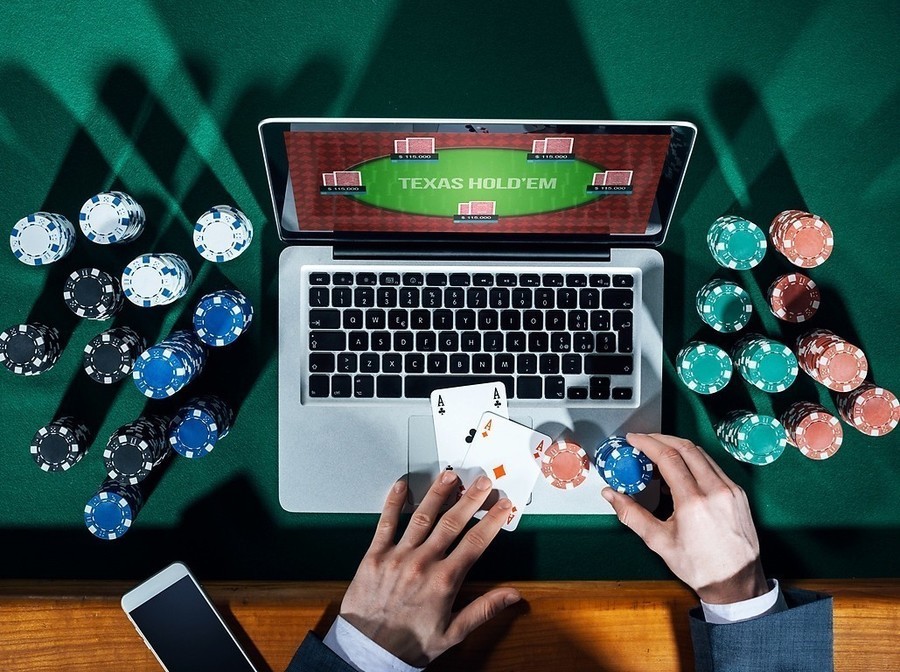
The transition of the plinko game to the digital realm has opened up new possibilities for customization and accessibility. Online versions often incorporate features not feasible in the physical game, such as adjustable payout structures, bonus multipliers, and visually appealing animations. The use of random number generators (RNGs) ensures fairness and transparency, as the outcome of each game is determined by an unbiased algorithm. This eliminates any potential for manipulation or bias inherent in a physical board. Furthermore, digital plinko games are readily available on a variety of platforms, including web browsers and mobile devices, making them accessible to a wider audience.
The Rise of Crypto Plinko
A recent trend in the online plinko space is the integration of cryptocurrency. Crypto plinko games allow players to wager and win in cryptocurrencies like Bitcoin and Ethereum, offering enhanced privacy and security. The use of blockchain technology ensures that game outcomes are verifiable and tamper-proof. This has attracted a growing number of players seeking a more transparent and trustworthy gaming experience. The decentralized nature of cryptocurrency also allows for faster payouts and lower transaction fees compared to traditional online casinos. This presents a novel way to experience the classic plinko game.
However, it’s essential to exercise caution when participating in crypto plinko games. The unregulated nature of the cryptocurrency market carries inherent risks, and it’s crucial to choose reputable platforms with proven security measures. Thorough research and due diligence are paramount before depositing funds or engaging in gameplay. Despite these risks, the appeal of crypto plinko continues to grow, driven by its innovative features and potential for lucrative rewards. It represents a fascinating intersection of classic gaming and cutting-edge technology.
- Select a reputable online plinko platform.
- Understand the game's rules and payout structure.
- Set a budget and stick to it.
- Be aware of the risks associated with cryptocurrency (if applicable).
- Gamble responsibly and for entertainment purposes only.
Following these steps can help ensure a safe and enjoyable experience with online plinko. Remember that the plinko game is ultimately a game of chance, and there are no guaranteed strategies for winning.
The Psychological Appeal of Plinko
Beyond the mechanics of physics and probability, the plinko game possesses a strong psychological appeal. The visual spectacle of the disc cascading downwards is inherently captivating. The anticipation builds with each bounce, creating a sense of excitement and suspense. This is further amplified by the potential for a large payout, even if the odds are slim. The game taps into our innate desire for rewards and our fascination with chance. The relatively simple rules make it easy to understand and engage with, while the unpredictable nature keeps players coming back for more.
Beyond Entertainment: Plinko as a Model for Complex Systems
Interestingly, the principles underlying the plinko game can be applied to model more complex systems in fields like finance and network traffic. The cascading disc can be seen as analogous to a particle moving through a system with multiple branching points. The probabilities of deflection at each peg can represent the likelihood of various events occurring in a real-world scenario. By analyzing the distribution of outcomes in a plinko game, researchers can gain insights into the behavior of these complex systems. The model provides a simplified yet insightful way to understand how randomness and interconnectedness can shape overall results. The seemingly frivolous game holds a surprising amount of analytical power.
This application highlights the enduring relevance of simple physical models in understanding the world around us. The plinko game, in its essence, is a microcosm of the chaos and uncertainty that pervade many aspects of life. It’s a reminder that even in the face of unpredictability, patterns and probabilities can still emerge, offering valuable insights into the underlying dynamics of complex phenomena.

関連記事

コメント
この記事へのトラックバックはありません。




















この記事へのコメントはありません。